

When it comes to home improvements, there is no project more valuable than replacing your roof.
Time is of the essence when it comes to necessary roof repairs. If your roof has suffered serious or irreparable damage, timing is critical. Delaying a roof repair or replacement can result in serious structural damage to your home. Ensuring your roof is reliable and in good health is critical for both your home and family.
With summer coming to an end, now is the perfect time to inspect your roof’s health. Autumn is an ideal time to find a professional for any pressing repairs your roof may need so you can protect your home against the harsh winter elements.
On an older or high-end home, roof work is rarely a standalone job. A leaking roof can damage interior finishes, insulation, and framing, and on a historic house, matching the original roofing materials takes extra care and cost. In the restoration and renovation work we do across Fairfield County and Westchester County, the roof is often one piece of a larger scope.
These warning signs are strong indicators that you need a new roof:
1. Leaks
Ceiling leaks are one of the most obvious and alarming signs that you need a new roof.
Leaks occur when water enters your home’s structure through worn, broken, or missing shingles, and areas where your roof’s sealing has deteriorated over time.
There is no time to spare when a leak is discovered in your roof. Water damage accelerates decay, which may result in holes or gaps in the foundation of your roof. The greater the number and severity of leaks, the greater the risk. Prolonged water exposure can significantly damage your home, compromising its structural integrity.
Leaks tend to show up in heavy rain, when the extra water finds any weak spot in the roof. Once it is inside, water can ruin paint, wallpaper, cabinetry, and appliances, and it gives mold and mildew a place to grow. The longer a leak goes unrepaired, the more interior work you will need afterward.
Be proactive. Have a professional assess your roof as soon as you notice leaking from your home’s ceiling.
2. Fallen & Missing Shingles
Discovering shingles on the ground or in your gutter is a sign that your roof is nearing its lifespan and is starting to fail.
Shingles fall when frail and weathered shingles are lifted off by wind or other weather elements. What starts as a few fallen shingles will rapidly multiply without repair, eventually leaving your roof exposed and vulnerable to more severe damage such as holes and leaks.
A roof at the end of its life cycle will start to lose smaller pieces of shingle, eventually losing full sections as it continues suffering damage.
Check the gutters as well. A roof at the end of its life sheds more of its granules, and they collect there. Look at the roof itself, too: a shingle can go missing without landing anywhere you will find it.
Wind and hail cause much of this damage. Strong wind lifts weakly attached shingles and exposes the layers beneath them. A severe hail storm can damage every shingle on a roof, so have the roof checked after one even if nothing has fallen.
Schedule a professional roof assessment to see where you currently stand. A reliable expert will check the entire structure from the shingles to the gutters to determine what damage, if any, your roof has suffered.
3. Shingle Curling
Your roof’s shingles should lay flat.
Curling shingles are a sign of a weathered roof and an indication of deterioration. Often shingle curling indicates that your roof is prone to leaking in the near future.
Shingles can curl in two ways: cupping and clawing. Cupping occurs when the edges of shingles turn upward. Clawing is when the middle of a shingle rises while the edges remain flat, creating the appearance of a bubble forming beneath.
Homeowners often opt to replace their roof once they notice multiple shingles affected. Though patching individual shingles is an option, it won’t stave off the eventual roof replacement your home will need.
Replacing too many shingles also results in an unappealing home exterior. When multiple shingles have been replaced in smaller sections, the contrast between the new and old shingles creates an uneven, unsightly pattern. Your shingle shading should always be uniform.
The more noticeable the curling, the more quickly your roof will become hazardous to your home. If you are noticing your shingles curling or bending, it’s time for a new roof.
4. Shingle Cracks
Often the result of wind damage, temperature swings, manufacturing defects, or improper installation, cracked shingles on your roof are a sign that your roof will require replacing soon.
Cracks in roof shingles create an easy entry point for water, resulting in roof leaks and inevitable damage.
Also look for bald spots, where the granules have worn off the shingle surface. Like cracks, they can show up on a roof where every shingle still appears to be in place.
To prevent ongoing repair costs, routinely inspect your roofs shingles for irregularities and potential damage. Frequent inspections allow you to get in touch with a roofing professional before your roof and home incurs critical damage.
5. Average Lifespan
The average lifespan of a roof is determined by the materials used to construct it. High-quality shingles and high-quality craftsmanship can extend the lifespan of your roof significantly. An asphalt shingle roof’s average lifespan is 20-40 years, while wood shingles or shake roofs can last 30 years.
Unfortunately, average roof lifespans are often misleading for homeowners to rely on. Numerous factors contribute to a roof deteriorating sooner than expected, including:
- Quality of materials
- Sloppy or improper installation
- Harsh weather elements
- Inconsistent maintenance
- Attic ventilation
- Angle of your roof’s slope
- Roof color, since some colors absorb more sun and age faster
- Movement in the house’s structure
- Temperature swings
As your roof nears its projected lifespan, routine inspections and maintenance are key in extending its life and guaranteeing your home won’t suffer unexpected damage.
A long warranty is not a reason to skip inspections. Even shingles with a 40-year warranty should be checked every few years, and heavy winter storms like the ones we get in the Northeast shorten a roof’s life.
You can also see none of the signs on this list and still have a roof near the end of its life. A professional inspection is the most reliable way to know where your roof stands.
Two situations call for an inspection even without a visible problem. If you are buying an older home, have the roof inspected so you know whether it needs work now or can wait a few years. And if your neighbors are replacing their roofs, look at yours: houses in a neighborhood are often built around the same time, so their roofs tend to age together.
6. Sunlight in the Attic
Daylight leaking through the roof boards of your attic is a strong indicator that it’s time to look into getting your roof repaired or replaced.
It’s crucial to check if sunlight is visible through areas of your roof where your chimney, vents, pipes, and any other equipment or hardware is located. Roof flashings, the material used to seal in joints, valleys, and seams in your roof, can wear out after just a few years of continuous exposure to sunlight.
It’s important to note: If daylight can come through your roof boards, so can water. The exposed areas of your roof boards should be repaired immediately to avoid risking water damage.
While checking your attic, keep an eye out for moisture in the insulation or signs of mold and mildew. Small leaks aren’t always easy to identify, but damage and evidence of a leak allows professionals to locate the area of the roof that needs to be addressed.
7. Moss, Mold, or Rot
Beyond tarnished aesthetics, anything growing on your roof could be a sign that you need a replacement.
Moss spreads like wildfire, holding moisture and creating damage. If your shingles are showing evidence of moss, you can be sure that the narrow spaces in between your shingles have already collected spores that will quickly spread the moss’ growth.
Once moss is present on your roof, it gradually causes water damage by soaking up and storing rainwater. When the moss releases the water, it travels through your roof’s underlayment and saturates the sheathing. Moisture damage to roof sheathing results in mold and decay.
Discoloration is worth a closer look. A stained or darkened patch on the roof can turn out to be mold.
Mold and rot are indicators that moisture damage has already occurred. The presence of mold from moisture not only results in its rapid spread throughout your home’s structure, HVAC system, and vents, but can lead to serious health issues for you and your family. Mold spores quickly reproduce, creating allergic reactions, asthmatic symptoms, and other health risks.
Avoid potential financial and medical consequences by getting your roof inspected at the first sight of moss, mold, or rot. Your wallet and bill of health will thank you later.
Repair or Replace?
Not every warning sign means a new roof. A single shingle lost in a high wind is a repair, and there is no need to replace the whole roof without getting advice first.
When shingles keep coming off and you are paying for repair after repair, replacement is usually the better use of money. Repeated repairs can also point to a problem in the wood sheathing under the shingles, and the only way to confirm that is to remove the old shingles and inspect the deck.
Repair costs depend on the type of damage, the roofing material, the pitch of the roof, and how easy it is to reach. Flashing repairs around chimneys and skylights tend to cost less than replacing a section of damaged decking. Be skeptical of any price given without an in-person look at the roof.
Most localized repairs take one to two days, depending on scope and weather (longer if decking or a lot of flashing needs replacing).
If you replace, buy the best shingles your budget allows. Cheaper shingles don’t hold up as well to wind, rain, and snow.
Roof Work on Historic and High-End Homes
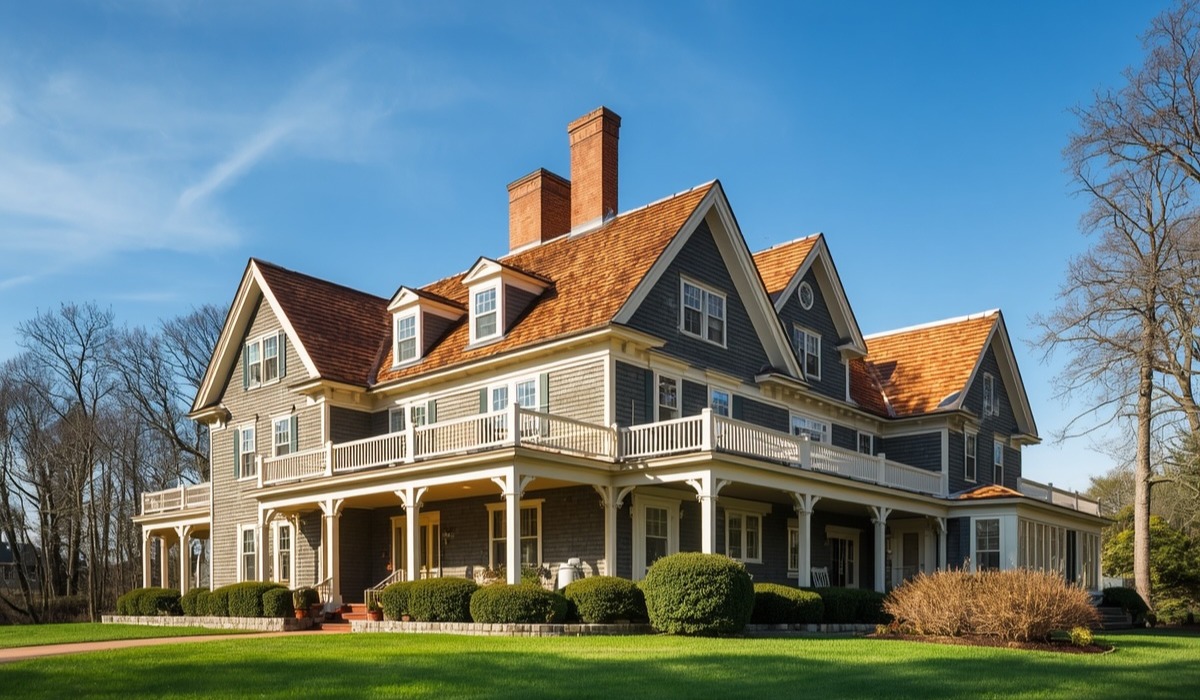
Our climate is hard on roofs. In Fairfield County and Westchester County, freeze-thaw cycles stress flashing, ice dams form along low-slope sections, and wind-driven rain finds gaps around dormers and chimneys.
On a historic or high-end home, the roof also has to suit the architecture of the house. Matching original materials adds complexity and cost, so plan for it from the start.
Asphalt shingles are a common choice, and some brands offer lifetime warranties that can transfer to the next owner. Wood shingles and wood shake are another, and we specialize in wood shake roofs. Clay, concrete, stone, and metal are also options.
On an older home, roof work often belongs in a larger renovation plan. We coordinate across trades, so roof work can be sequenced alongside interior projects such as a kitchen renovation.
If you plan to sell, a roof can be worth upgrading before it fails. An old roof can lower a home’s value, and a better class or style of shingle can make the house more appealing to buyers.
Before You Hire Anyone to Work on Your Roof
Whoever does the work, check these points first:
- Registration: in Connecticut, roofing contractors must hold a Home Improvement Contractor registration through the Department of Consumer Protection. In New York, requirements vary by county, so ask your local building department.
- Insurance: ask for certificates of general liability and workers’ compensation coverage before work begins.
- Manufacturer certification: GAF, Owens Corning, and CertainTeed run certification programs, and a certified installer may be able to extend warranty coverage beyond the standard product warranty.
- Estimates: get at least three written estimates that list the materials, the repair method, and the warranties on labor and materials. A lump sum with no detail is a warning sign.
- Warranties: the manufacturer’s product warranty and the contractor’s labor warranty are separate documents with different terms. Read both.
- Permits: some repairs need one. A contractor who suggests skipping the permit puts the compliance risk on you.
- References: ask for recent jobs in your area that are similar in scope to yours.
- Insurance claims: homeowner’s insurance usually covers sudden damage, such as a storm or a falling tree, but not wear from age or neglect. Call your insurer before work starts and photograph the damage.
Spring and fall are the busiest roofing seasons in the Northeast, so plan ahead if you can.
Trust the Experts
If your home is experiencing any of the above warning signs, your roof may be in need of repairs or a complete replacement.
Rely on the advice of a professional with extensive experience. Only a trained professional can diagnose and identify any pressing roof problems and suggest quality solutions.
Gerety Building & Remodeling has worked on homes across Fairfield County and Westchester County for more than 40 years, including historic structures, custom builds, and high-end properties. On those homes, roof work is part of a larger restoration or renovation. See our portfolio and reviews.
Planning a restoration or renovation that includes roof work? Whether it is happening now or in the future, we’re happy to answer any questions you may have.
Let us know what you’re working on, and we’ll show you how we can help.